Enabling Secure Sockets Layer (SSL) for the Network Device Enrollment Service (NDES)
In the default configuration, the Network Device Enrollment Service (NDES) only accepts unencrypted connections via HTTP. It is recommended that at least the NDES administration web page be configured for HTTP over TLS (HTTPS) to make capturing the network traffic more difficult. Instructions are provided below.
For a closer look at the need to use SSL, see the article "Should HTTPS be used for the Network Device Enrollment Service (NDES)? ".
The Network Device Enrollment Service (NDES) provides a way for devices that do not have an identity in Active Directory (for example, network devices such as routers, switches, printers, thin clients, or smartphones and tablets) to request certificates from a certification authority. For a more detailed description, see the article "Basics: Network Device Enrollment Service (NDES) ".
Requesting an SSL certificate
Do you know TameMyCerts? TameMyCerts is an add-on for the Microsoft certification authority (Active Directory Certificate Services). It extends the function of the certification authority and enables the application of rule sets to realize the secure automation of certificate issuance. TameMyCerts is unique in the Microsoft ecosystem, has already proven itself in countless companies around the world and is available under a free license. It can be downloaded via GitHub and used free of charge. Professional maintenance is also offered.
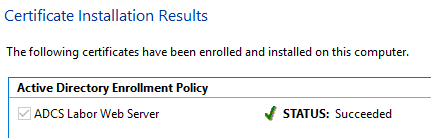
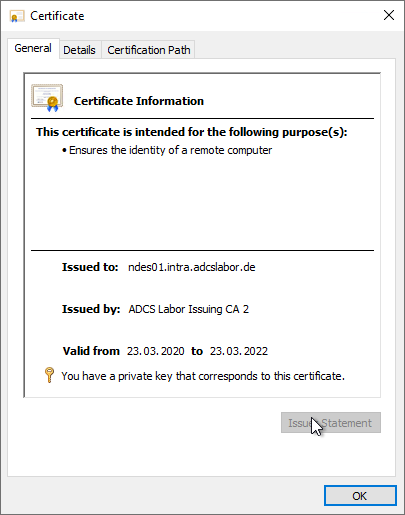
First, a web server certificate must be requested for the NDES server.
- The article "Configuring a Secure Socket Layer (SSL) Certificate Template for Web Server " describes how to create a certificate template for SSL.
- The article "Generating an RFC 2818 compliant certificate request for SSL certificates " describes how to create an RFC 2818 compliant certificate request for SSL certificates.
Binding the SSL certificate to the NDES server
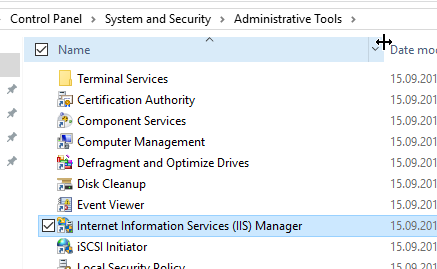
After an SSL certificate has been requested for the NDES server, it must now be bound to the web server. To do this, the Internet Information Services (IIS) Manager is called up via the administrative tools.
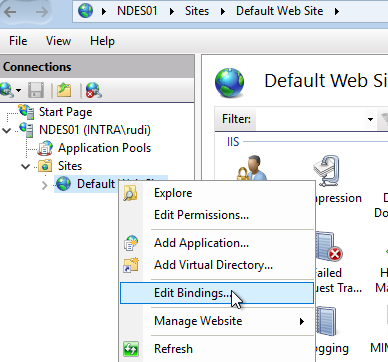
NDES is installed in the Default Web Site of the web server. Accordingly, the bindings must be edited here.
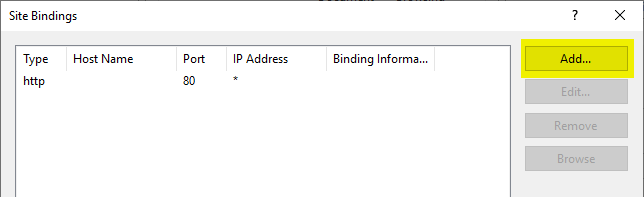
If there is no SSL binding yet, a new one must be created.
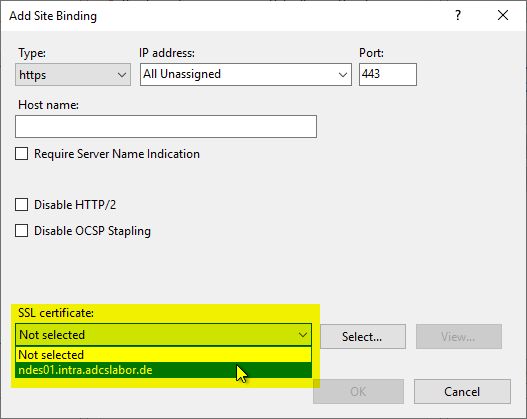
The Default Web Site should answer all requests not defined otherwise, so the default setting regarding IP addresses and host names can be kept. Only the SSL certificate must be selected.
Enforcing the use of SSL
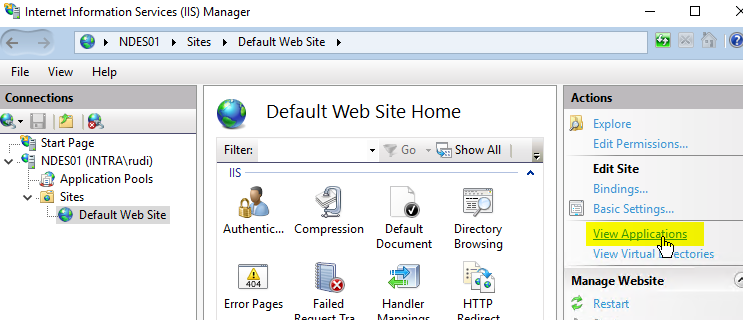
Now the web server supports requests via HTTPS, but for NDES these are not enforced, i.e., requests can still be submitted via HTTP. If you want to enforce SSL specifically for NDES, go to the Default Web Site and click "View Applications" on the right side.
NDES is split into two applications:
- The interface for requesting the one-time passwords (mscep_admin)
- The interface for requesting the certificates (mscep)
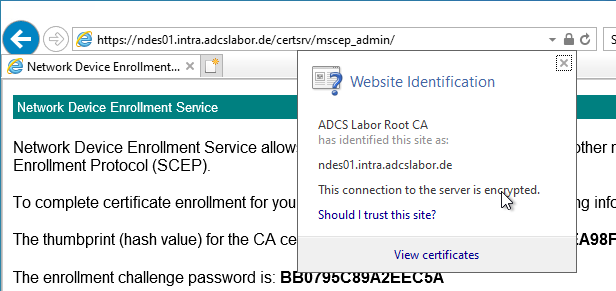
It is recommended to enforce HTTPS at least for the mscep_admin application to prevent the credentials from being captured. The mscep application can optionally also be configured to enforce HTTPS, but this is not absolutely necessary since encryption already takes place at the protocol level (see article "Should HTTPS be used for the Network Device Enrollment Service (NDES)? "). The procedure is identical and is therefore described only once for the mscep_admin application.
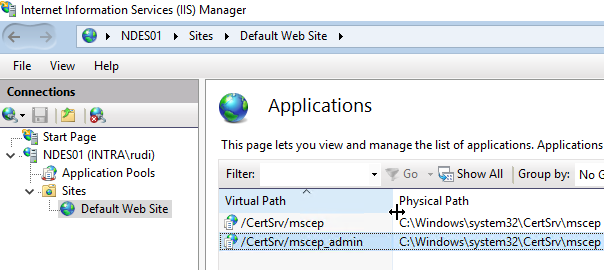
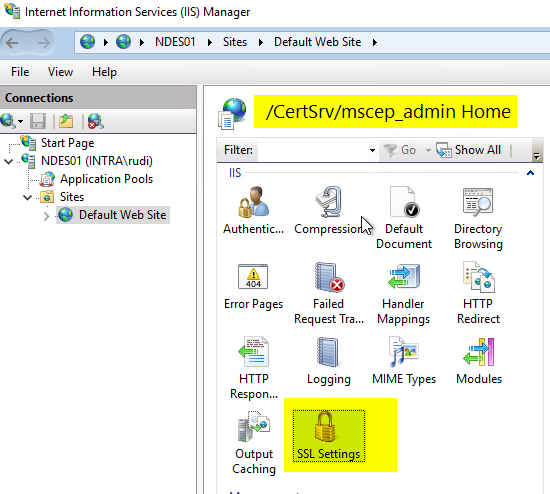
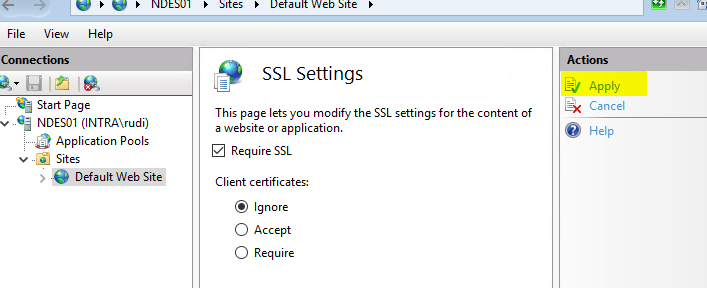
After double-clicking the application, select "SSL Settings".
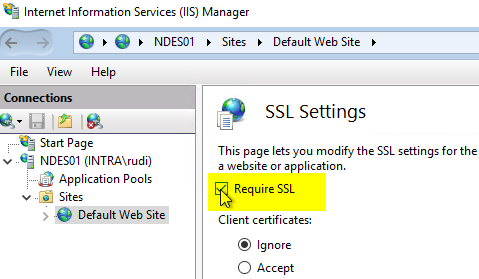
Here you enable the "Require SSL" checkbox.
Then click "Apply" on the right-hand side.
Now, if desired, the mscep application can be configured in the same way. First click once on a node outside the Default Web Site and then on the Default Web Site again, so that the applications are available for selection again.
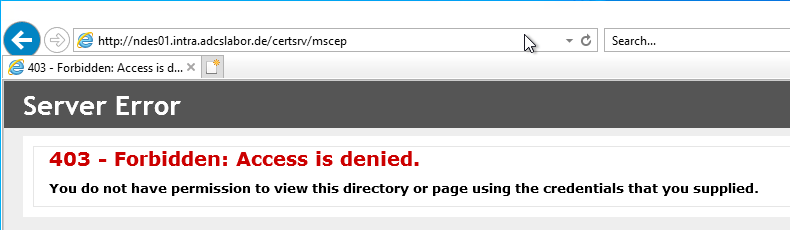
NDES should now refuse to accept connections via HTTP without TLS.